Leak Detection
Locate a concealed leak in a wall, beneath a floor or along the buried supply pipe.
A pool loses water every day to the sun. When it loses more than that, the question is whether the water is escaping through the shell, the plumbing or the equipment.
Do the bucket test first. It tells you what to tell the dispatcher.
Fill a bucket with pool water, match its level to the pool, rest it on a step so the base is submerged, and mark both levels. A day later, compare. A pool that fell further than the bucket is losing water by some route besides evaporation.
Repeat the test with the pump running and again with it off. A pool that only drops while the pump runs has a leak on the pressure side of the plumbing. A drop either way points more toward the shell or a wall fitting.
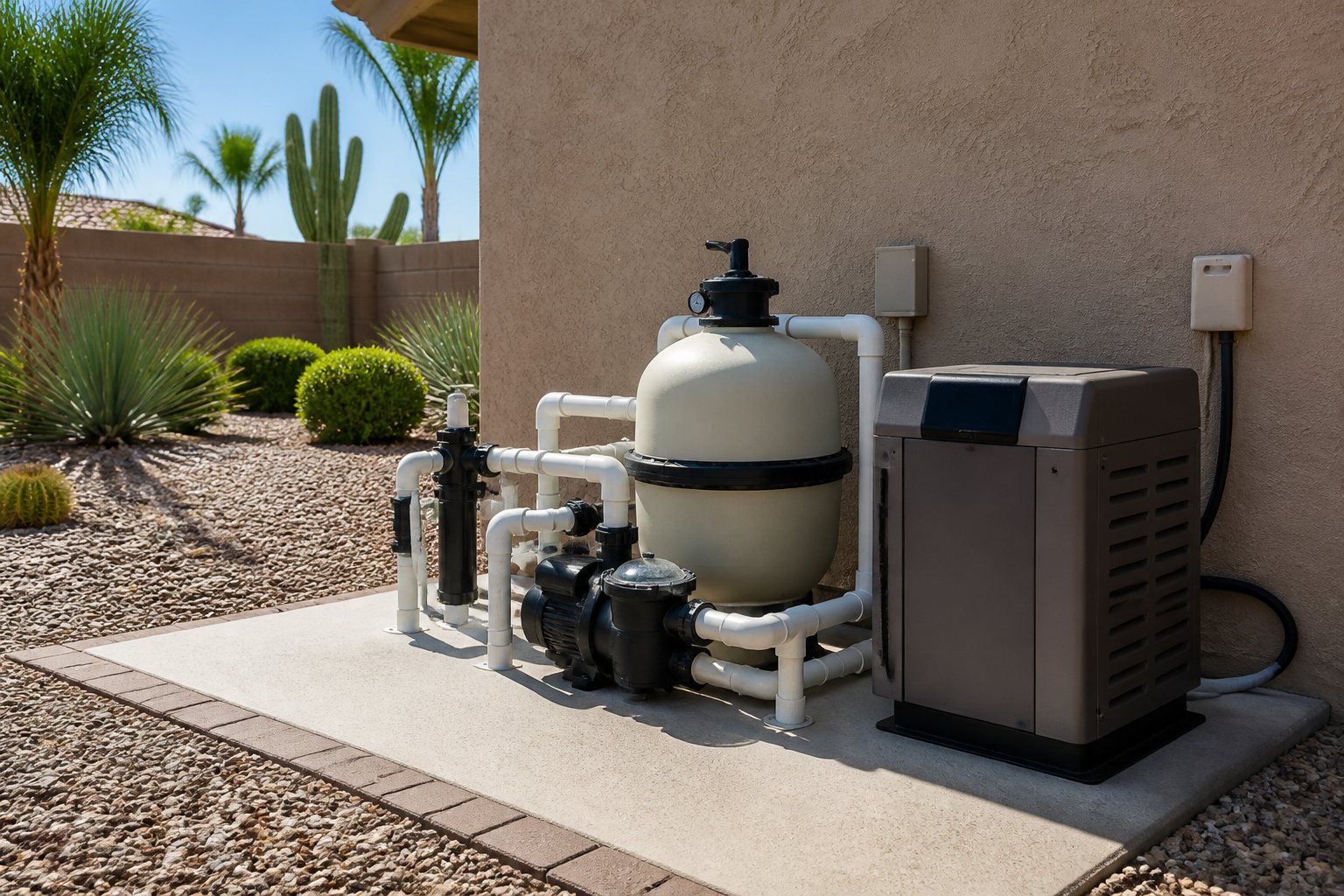
Pool plumbing runs underground between the pump, the filter, the heater and the pool. A crack, a failed fitting or a root can leak at any point. Skimmer throats, return fittings, light niches and the equipment pad are common weak spots. The shell itself, whether plaster, tile or a liner, can also leak through a crack or a worn seal.
With the pipes underground, a leak may go on for ages unnoticed. Ground that stays wet near the pad or a soft spot in the deck are clues.
Locating the leak and repairing it are two separate jobs, and both are priced on the details.
Ask whether the quote covers the deck repair, and whether it includes refilling and rebalancing the water.
In a warm climate with sun, wind and screen enclosures, evaporation can be large, especially in summer. Heavy summer storms can add water to the pool and hide a slow leak for a few days, so the bucket test is best done during a dry stretch.
Many homes in Maricopa County have pools, and the ground can be sandy and wet, which means a leaking line can be slow to show on the surface.
A pool leak search works by elimination. Each section of plumbing can be isolated and pressure tested to see whether it holds. If a section loses pressure, the leak is in that line. Underwater dye can show where water is being drawn out of a crack or a fitting, and listening equipment can help trace a pressurized line.
The shell, the skimmer and the fittings are checked as part of the process. The result should be a specific location, not just a general guess.
A repair may be as small as replacing a fitting or as large as digging up a line and replacing a section of pipe. Pool plumbing repair often means breaking into the deck, so ask how the surface will be restored.
Do not keep refilling a leaking pool without a plan. A steady leak can wash out soil, damage the deck and run up the water bill. If you suspect a leak, stop adding chemicals until you know how much water you are losing.
A spa has its own jets, suction lines and return lines. A leak may be in the shell, a fitting or a buried pipe. Spa lines are covered along with the pool.
Remodels can disturb fittings and pipe. If the level drops after the work finishes, a pressure test of each line can show which one is leaking.
Locate a concealed leak in a wall, beneath a floor or along the buried supply pipe.
Repair or replace the pipe that carries water from the meter into the house.
Test and maintain the device that keeps irrigation and reclaimed water out of drinking water.
It varies with sun, wind, temperature and how much the pool is used. A loss of about a quarter inch per day is a common rule of thumb, though a bucket test is a better guide.
Often yes, but a steady leak can undermine the surrounding ground. If the pool is dropping quickly or water is surfacing in the yard, stop running the pump and call.
The bucket test, run with the pump on and off, helps tell. Pressure testing individual lines settles it.
Sometimes. Fixing a fitting below the waterline or a crack in the shell may require lowering the water, while a plumbing repair under the deck may not.
Yes, the line answers around the clock. A pool that is dropping fast, or a leak at the equipment pad, is worth reporting right away. Turn the pump off if the water level nears the skimmer.
Yes. A pressure test of each line shows which one is leaking, and spa lines are covered.
It can point to a pressure-side leak in a return line or fitting. A contractor can test each line.
Do the bucket test, then call with the result. It helps the contractor plan the visit.
Service area centered on Sun City West and nearby Maricopa County cities.