Burst Pipe Repair
Stop the water, then repair the cracked or split pipe behind it.
Water starts doing harm within hours, and mold can take hold in a day or two. Restoration is a separate job from the plumbing repair: stop the water, remove it, dry the structure and restore what was lost.
This page has its own restoration phone line. Call it for water damage.
Stop the source if you can. For a leaking pipe, close the main water valve. For storm or flood water, stay out of the water if power is on, and turn off the electricity only from a dry spot or have the utility do it.
Photograph the damage before you move anything, for your insurer. Lift furniture off wet carpet, remove small items and open windows if the weather allows. Then call the restoration line.
The industry reference for water damage work is the IICRC S500 standard, which sorts water by how contaminated it is. Clean water comes from a broken supply line. Gray water has some contamination, such as washing machine overflow. Black water, such as sewage or flood water, carries serious health risks.
The category changes the work. Clean water damage may allow drying in place, while black water usually requires removing porous materials such as carpet and drywall. Ask the crew which category they believe applies, and ask whether they follow S500.
Monsoon season, roughly mid-June through the end of September, can bring sudden heavy rain and flash flooding to the area. Houses in low-lying spots or near a wash face the most risk from water pushed in around doors, windows or a roofline.
Flood water from a storm is usually treated as contaminated. After a storm, ask whether your homeowner or flood policy covers the loss, and call your insurer early.
Restoration is priced by the size of the loss and the type of water, and it often involves your insurer.
Ask for a written scope. If insurance is involved, ask whether the company works with your adjuster.
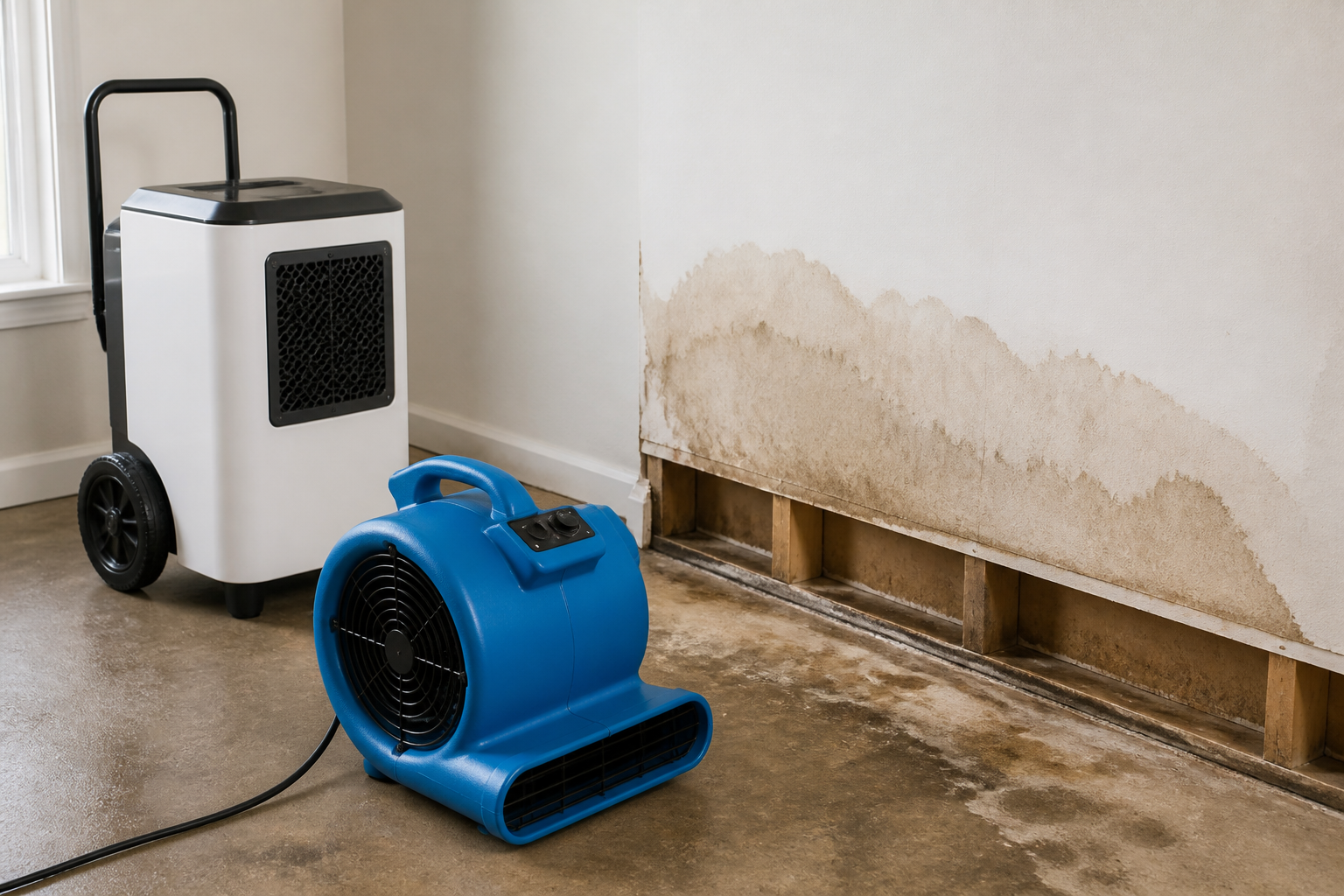
Restoration crews extract standing water, then use air movers and dehumidifiers to pull moisture out of the structure. They measure moisture in walls and floors with meters and track the readings each day until the materials reach a dry standard.
Wet drywall, insulation and carpet padding that cannot be dried are removed. Thermal imaging can help find moisture behind surfaces. The aim is to dry the building before mold grows and before materials warp or rot.
The EPA says mold can start to grow within 24 to 48 hours on wet materials, even in a dry desert climate, because the moisture is trapped inside walls and flooring rather than exposed to the outside air. Drying quickly is the best prevention. If mold is already present, ask about containment and removal.
After drying, rebuilding includes replacing drywall, insulation, baseboards and flooring, and painting. Some restoration companies do the rebuild, and others only dry the structure. Ask what is included. A plumber is a separate trade, and you may need one to repair the leak that caused the damage.
Report the loss as soon as you can, and ask the insurer what it needs, such as photos, a list of damaged items and a written scope. Keep receipts for emergency steps. Do not throw away damaged items before the adjuster has seen or approved them, except where health is at risk.
Ask the restoration company whether it will provide moisture logs and a written scope of work, since insurers often want them. A documented record of readings and equipment days makes a claim easier to review.
Stop the water, then repair the cracked or split pipe behind it.
Locate a concealed leak in a wall, beneath a floor or along the buried supply pipe.
Diagnose no hot water, leaks, noise and pilot or element problems.
As soon as possible. Mold can start to grow within 24 to 48 hours on wet materials.
If a pipe or appliance caused the water, yes. Restoration dries the structure, and a plumber repairs the source.
It can carry sewage and other contaminants. Avoid contact, and ask a professional to handle it.
Many homeowner policies cover sudden water damage, and flood damage often needs a separate flood policy. Read yours and call your insurer.
Yes. This page has its own phone line, and it is answered around the clock. Stop the water at the source first if you can do it safely.
Phone the restoration line and tell them the source of the water and roughly how much is there.
Service area centered on Sun City West and nearby Maricopa County cities.