Faucet & Sink Repair
Repair drips, weak flow, stuck shutoff valves and leaking outdoor spigots.
A toilet that keeps running can lose hundreds of gallons in a month, and one that rocks can leak onto the subfloor. A handful of inexpensive parts cause most toilet trouble. An overflowing toilet or a leak at the base should be stopped at the supply valve, then call the 24/7 line.
Tell the dispatcher what the toilet is doing. It helps the contractor bring the right parts.
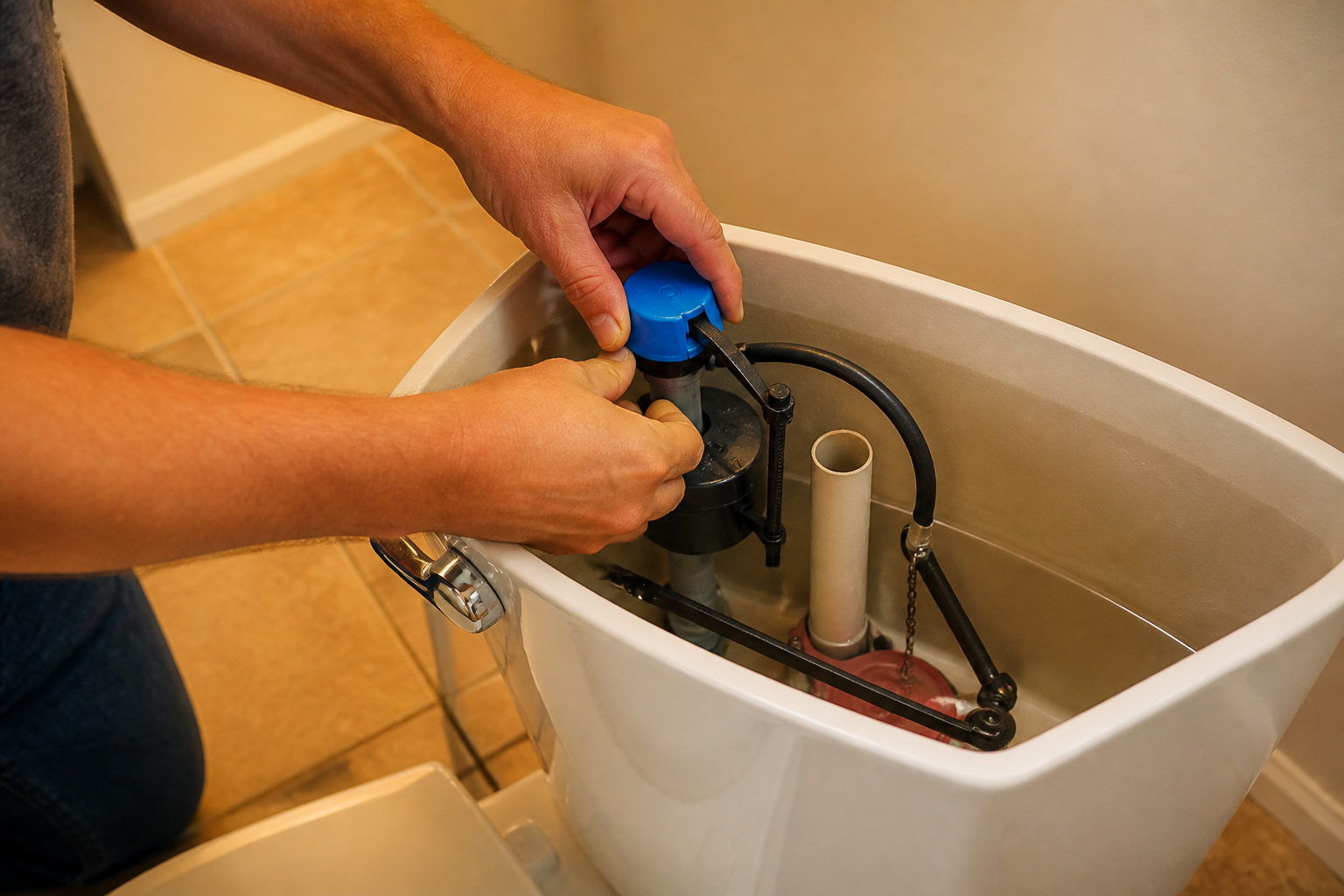
Lift the tank lid and watch. If water trickles into the overflow tube, the fill valve is not shutting off or the float is set too high. If the tank level drops and the fill valve keeps turning on, the flapper is leaking into the bowl.
Dye in the tank exposes a leaky flapper. Color reaching the bowl without a flush means the flapper has to be replaced. It is one of the cheapest repairs in plumbing, and it is often a quick job.
Rubber flappers harden, warp and collect mineral film over the years. Disinfectants in the water supply can also speed up the aging of rubber and plastic parts. A flapper that was fine a few years ago may no longer seal.
If the fill valve or the flush valve is worn as well, replacing the whole set of internal parts costs only a little more and avoids a second visit.
The city's water uses chloramine as a disinfectant, which can shorten the life of some rubber parts compared with plain chlorine. If your flapper keeps going bad, ask for a chlorine-resistant replacement.
Older homes may have shutoff valves that have not been turned in years. A stuck or leaking valve under the toilet is worth replacing at the same time.
Toilet work ranges from a small part swap to a full replacement.
Ask whether the price includes removal and disposal of the old toilet.
Water around the base of the toilet is a different problem. A wax ring, or a newer wax-free seal, sits between the toilet and the drain flange. Once it gives out, water creeps out around the base on every flush, soaks the floor and can rot the subfloor.
A toilet that rocks is a sign the seal may be failing. Do not keep using it. The plumber pulls the toilet, checks the flange, replaces the seal and sets the toilet down level on new bolts.
A plunger clears most clogs. Use a flange plunger and push gently. If the toilet clogs often, a partial blockage deeper in the drain or a problem with the main line may be the cause. A weak flush can come from clogged jets under the rim, which mineral buildup closes up.
Replacement makes sense for a cracked bowl, a toilet that is old and uses much more water than a modern one, or a style you no longer like. A new toilet is installed with a new seal, supply line and shutoff valve. Ask about the rough-in size, which is the distance from the wall to the drain, since it decides which toilets fit.
Some toilet problems are small parts. Others point past the toilet.
A fill valve controls how the tank refills, and a supply valve is the shutoff behind the toilet. Both can fail with age or mineral buildup. The wax ring is the gasket between the toilet and the drain, and a new one goes in whenever the toilet is lifted.
If the fill valve will not come off, do not force it. A stuck nut can crack the tank. A plumber has tools for this and can usually finish the job in one visit.
If sewage backs up into a shower or tub when you flush, the clog is farther down. See drain cleaning for the main line, and sewer line repair if the problem keeps coming back.
If a toilet is cracked, replace it. A hairline crack in the bowl or tank can leak or fail without much warning.
Repair drips, weak flow, stuck shutoff valves and leaking outdoor spigots.
Clear kitchen, bath, laundry and main-line clogs and find out why they came back.
Locate a concealed leak in a wall, beneath a floor or along the buried supply pipe.
When the flapper leaks, tank water creeps into the bowl and the fill valve kicks on to top it up. A new flapper normally ends the cycle.
Yes. It may mean a failing seal, and a leak at the base can damage the floor.
It can waste hundreds of gallons a month and raise your bill. A dye test in the tank confirms a leak.
If the problem is a part, repair. If the bowl is cracked or the toilet is old and inefficient, replacement may be better.
Call the 24/7 line for an overflowing or leaking toilet. Close the supply valve behind the toilet, lift the tank lid and stop the float if the bowl is rising, and tell the dispatcher what the water is doing.
Yes, this is a routine job for a plumber. Do not force a stuck nut, since the tank can crack.
In most cases yes. A cracked bowl or tank can leak or fail suddenly, and replacement is more dependable than a patch.
It points to a blockage in the shared drain or main line, not a toilet fault. Stop using water and call.
Yes. Give the dispatcher the brand and what the unit is doing when you call.
Call and describe what it is doing. The dispatcher will connect you with a local contractor.
Service area centered on Sun City West and nearby Maricopa County cities.